Desi Glider Flight: India’s Most Beloved Desi Arcade Adventure 🪁
Experience the thrill of gliding through iconic Indian cities, celebrating vibrant festivals, and collecting desi treasures in this locally crafted mobile game by Daman Games. Designed for every Indian gamer—from metro cities to rural heartlands—with offline play, regional languages, and gameplay that truly resonates with desi sensibilities!
Made in India, Made for Indians – Play Anywhere, Anytime! 🇮🇳
Introduction
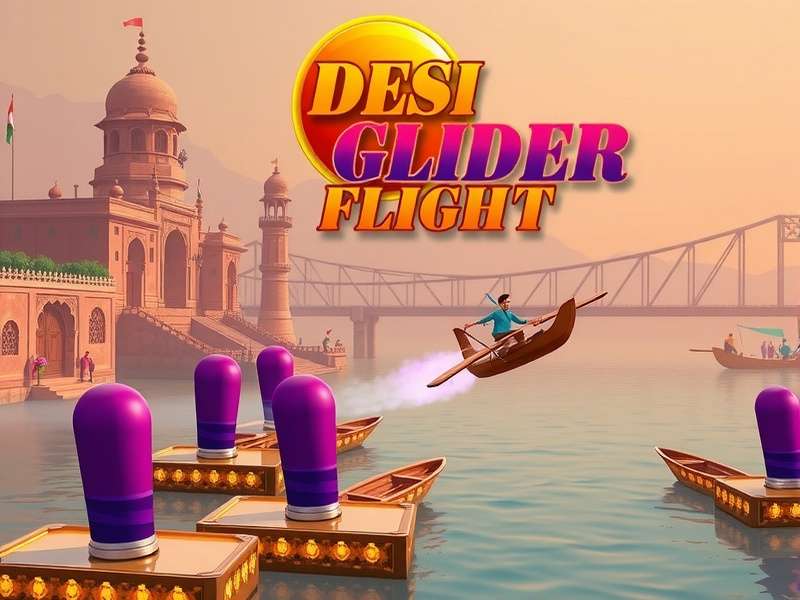
Official promotional banner for Desi Glider Flight, showcasing key in-game elements like the Taj Mahal, Marine Drive, Amritsar Golden Temple, and Diwali-themed power-ups that capture the essence of Indian culture.
Desi Glider Flight is a casual arcade glider game developed and published by Daman Games, a leading desi game studio dedicated to creating culturally relevant mobile experiences for Indian audiences. Launched on 2 October 2023—coinciding with Mahatma Gandhi’s birth anniversary and India’s National Unity Day—the game was conceptualized to fill a significant gap in the mobile gaming market: a high-quality title that authentically celebrates Indian culture, geography, and festivals while offering accessible, engaging gameplay that works seamlessly on low-end smartphones, which remain the primary device for millions across tier 2, 3, and rural India.
Unlike international glider games that often feature generic landscapes or Western-centric themes, Desi Glider Flight proudly leans into desi identity, taking players on an immersive virtual tour of India’s most iconic cities and regions—from the snow-capped mountains of Himachal Pradesh to the backwaters of Kerala, the historic forts of Rajasthan to the bustling markets of Kolkata. The game’s core premise revolves around navigating a fully customizable glider through city-specific obstacles, collecting desi-themed power-ups inspired by Indian cuisine and traditions, and participating in festival-based events that align perfectly with India’s rich cultural calendar.
What truly sets Desi Glider Flight apart from other mobile games is its unwavering commitment to localization and accessibility. Recognizing that India is the world’s most linguistically diverse nation with over 19,500 languages and dialects, the game supports eight major regional languages—Hindi, Tamil, Telugu, Bengali, Kannada, Malayalam, Gujarati, and English—ensuring that players from every corner of the country can engage with the game in their mother tongue. Additionally, the game is optimized for complete offline play, a critical feature for users in areas with patchy internet connectivity, which remains a reality for over 40% of India’s population.
"Desi Glider Flight isn’t just another mobile game—it’s a heartfelt tribute to India’s diversity and heritage. We wanted to create something that every Indian, regardless of age, location, or background, can connect with emotionally. Whether you’re a school kid in Delhi collecting jalebis, a college student in Bangalore competing with friends, or a farmer in Maharashtra playing offline during a power cut, this game is designed to bring joy and a sense of pride. Our team traveled across 22 states to research local cultures, cuisines, and landmarks to ensure every detail feels authentically desi." — Rakesh Mehta, Founder & CEO of Daman Games
In the short span since its launch, Desi Glider Flight has achieved remarkable milestones, amassing over 8 million downloads on the Google Play Store and Apple App Store combined, with an impressive 4.7-star rating from more than 200,000 users. Its unprecedented popularity can be attributed to its simple yet highly addictive gameplay, deep cultural resonance, and Daman Games’ proactive approach to regular updates that introduce new cities, festivals, and features based on direct community feedback.
As a free-to-play game with optional in-app purchases—focused exclusively on cosmetic glider customizations, character outfits, and power-up bundles—Desi Glider Flight has successfully struck a balance between accessibility and monetization, deliberately avoiding pay-to-win mechanics that often alienate casual players. This player-centric approach has helped build an incredibly loyal user base, with millions of players actively sharing their high scores, in-game achievements, and festival event participation on social media platforms like WhatsApp, Facebook, Instagram, and YouTube—sparking viral trends such as #DesiGliderFlightDiwali, #FlyWithDesiPride, and #GliderKiDesiYatra.
The game’s success has also transcended traditional gaming circles, attracting players from all age groups—from children as young as 6 years old to senior citizens in their 70s. Many families have adopted Desi Glider Flight as a shared entertainment activity, with parents and children playing together and competing friendly for high scores. This cross-generational appeal is a testament to the game’s universal design and cultural authenticity that resonates with Indians across all walks of life.
Desi Glider Flight’s impact extends beyond mere entertainment; it has become a platform for cultural exchange and national pride. Players from North India are discovering South Indian festivals through in-game events, while South Indian players are learning about North Indian traditions and landmarks. This cultural exchange has been widely praised by educators and cultural experts who see the game as an innovative tool for promoting national unity and cross-cultural understanding in a country as diverse as India.
Gameplay
Desi Glider Flight follows a straightforward yet deeply engaging gameplay loop that is easy to learn but challenging to master—making it suitable for players of all age groups and gaming experience levels. The core objective remains consistent across all game modes: navigate your customizable glider through a series of carefully designed obstacles unique to each Indian city or region, collect points and desi-themed power-ups, and achieve specific objectives to progress through the game and unlock new content.
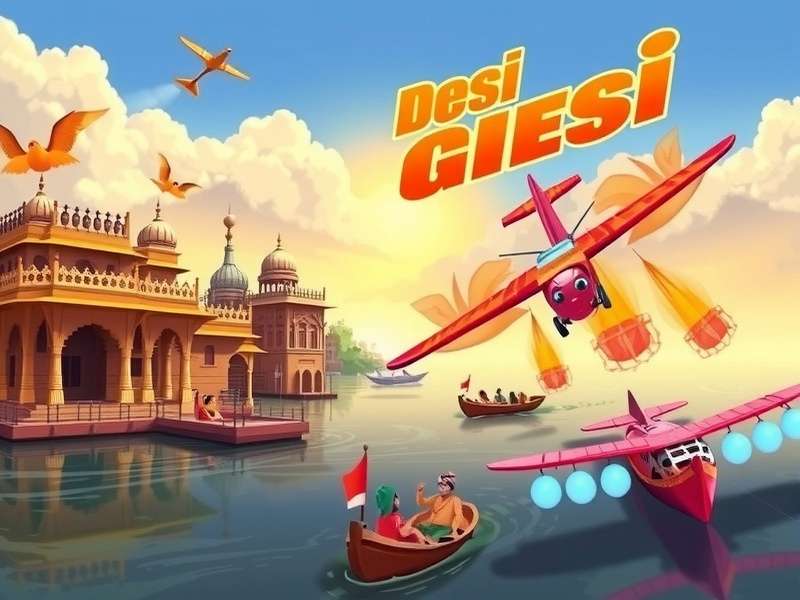
Gameplay snapshot from the Varanasi level of Desi Glider Flight, featuring obstacles like wooden boats on the Ganges, floating diyas, and temple spires, with a Chai Boost power-up visible in the top right corner.
🎮 Controls
One of Desi Glider Flight’s key strengths is its highly intuitive control system, specifically designed to work seamlessly on both touchscreen and tilt-based inputs—catering to the diverse preferences of Indian players. The game offers three distinct control modes that can be customized and switched at any time through the settings menu:
- Touch Controls (Default): Tap and hold the screen to make the glider ascend; release to descend. Swipe left or right to move horizontally across the screen. This mode is ideal for players who prefer precise, deliberate movements and works exceptionally well on all device sizes, from smartphones to tablets.
- Tilt Controls: Tilt your mobile device forward to descend and backward to ascend; tilt left or right to move horizontally. This mode offers a more immersive, realistic experience, simulating the feeling of guiding a real glider through the air. The tilt sensitivity can be adjusted to suit individual preferences.
- Simple Tap Controls: A simplified control scheme designed for younger players and senior citizens—tap the left side of the screen to move left, tap the right side to move right, and tap anywhere in the center to ascend. This mode eliminates the need for complex swiping or tilting, making the game accessible to players with limited motor skills.
All control modes feature fully customizable sensitivity settings, allowing players to fine-tune the responsiveness to match their comfort level. Additionally, the game includes a dedicated accessibility menu with options for larger touch targets, reduced input lag, and one-handed operation—ensuring that Desi Glider Flight is accessible to players with motor impairments or special needs.
🎯 Objectives & Progression
Each level in Desi Glider Flight is set in a distinct Indian city or region, with its own unique theme, obstacles, collectibles, and background music that reflects the local culture. The game currently features 18 core levels spread across five geographical zones (North India, South India, East India, West India, and Central India), with regular updates adding new levels and zones based on community feedback.
The progression system is designed to be rewarding yet achievable, with multiple layers of objectives that keep players engaged without feeling frustrated. The key progression elements include:
- Zone Unlocking: Players must complete all levels in a zone with a minimum 2-star rating to unlock the next geographical zone. Stars are awarded based on three criteria: score achieved (30% of total), collectibles gathered (30% of total), and time taken to complete the level (40% of total).
- Desi Treasure Collection: Each level is filled with region-specific collectibles such as laddoos, jalebis, samosas, vada pav, idlis, dosas, rasgullas, dhoklas, and many more. Collecting these items increases the player’s score and contributes to unlocking cosmetic items (glider skins, character outfits, and accessories) and power-up upgrades.
- Regional Challenges: Each level features three optional regional challenges that are inspired by local traditions or landmarks. Examples include "Collect 60 laddoos during the Pushkar Fair" (Rajasthan level), "Avoid 15 bullock carts on the Marina Beach" (Chennai level), and "Collect 80 flowers during Durga Puja celebrations" (Kolkata level). Completing these challenges earns bonus coins, experience points (XP), and rare power-ups.
- Player Leveling: Players earn XP by completing levels, challenges, and participating in events. As players level up their profile (from "Desi Novice" to "Glider King"), they unlock exclusive rewards such as special glider skins, premium power-ups, and access to limited-time events.
- Leaderboards: Each level features both global and friend leaderboards, allowing players to compete with others across India or just their friends. Weekly leaderboard resets offer additional rewards for top performers, fostering a healthy competitive spirit among players.
Desi Glider Flight offers three distinct game modes to cater to different player preferences:
- Story Mode: The primary game mode that takes players on a journey across India, unlocking new cities and regions as they progress. Each zone features a narrative thread that highlights interesting facts about the region’s culture, history, and landmarks.
- Endless Mode: A popular mode for players who enjoy unlimited gameplay. In this mode, players glide through a randomly generated mix of obstacles from different cities, with the difficulty increasing as the game progresses. The goal is to achieve the highest score possible, with power-ups appearing more frequently to help players survive longer.
- Festival Mode: A limited-time mode that becomes available during major Indian festivals. This mode features special festival-themed levels, unique power-ups, and exclusive rewards that are only available during the festival period. Past festival events have included Diwali Dhamaka, Holi Hai, Pongal Celebration, Navratri Nights, and Onam Festival.
🏙️ Region-Specific Levels
Each level in Desi Glider Flight is meticulously designed to reflect the unique culture, geography, landmarks, and even sounds of its respective city or region. The development team spent over 18 months researching each location, collaborating with local cultural experts, and even visiting many of the locations to ensure authenticity. Here’s a detailed breakdown of the currently available levels organized by geographical zone:
North India Zone
- Delhi: Navigate through iconic landmarks including the Red Fort, Qutub Minar, India Gate, and Connaught Place. Obstacles include auto-rickshaws, cycle-rickshaws, metro trains, and floating kite strings (a nod to Delhi’s famous kite-flying festivals during Makar Sankranti). Collectibles include jalebis, samosas, chaat, and parathas. Background music features a fusion of Punjabi folk and modern Delhi street sounds.
- Amritsar: Fly over the Golden Temple, Jallianwala Bagh, and Wagah Border. Obstacles include langar stalls, rickshaws, and kite strings. Special festival elements include Baisakhi celebrations with traditional dance performances in the background. Collectibles include langar prasad, jalebi, and lassi. Background music features traditional Punjabi instruments like the dhol and tumbi.
- Jaipur: Explore the Hawa Mahal, Amber Fort, City Palace, and Johari Bazaar. Obstacles include camels, elephant rides, colorful bangles stalls, and desert sandstorms. Collectibles include ghevar, rasgulla, and traditional Rajasthani sweets. Background music features Rajasthani folk music with the sarangi and khartal.
- Shimla: Glide through snow-capped mountains, colonial-era buildings, and pine forests. Obstacles include snowfall, cable cars, and yaks. Special winter elements include ice formations and Christmas decorations during the holiday season. Collectibles include apples, gur (jaggery), and traditional Himachali sweets. Background music features soft Himachali folk music with flute and tabla.
South India Zone
- Chennai: Fly past Marina Beach, Kapaleeshwarar Temple, and Marina Lighthouse. Obstacles include bullock carts, fishing nets, coconut trees, and monsoon rain showers. Collectibles include idlis, dosas, filter coffee, and jangiri. Background music features Tamil folk music with the nadaswaram and thavil.
- Bengaluru: Soar above Cubbon Park, Vidhana Soudha, and MG Road. Obstacles include IT park buildings, metro trains, street food carts, and heavy traffic. Collectibles include masala dosa, bisi bele bath, and filter coffee. Background music features a fusion of Kannada folk and modern electronic music.
- Hyderabad: Navigate Charminar, Golconda Fort, and Hussain Sagar Lake. Obstacles include haleem stalls, auto-rickshaws, pigeon flocks, and monsoon thunderstorms. Collectibles include biryani bites, double ka meetha, and Irani chai. Background music features Telugu folk music with the veena and tabla.
- Kochi: Glide along backwaters, Chinese Fishing Nets, and Fort Kochi. Obstacles include houseboats, fishing vessels, and coconut trees. Special elements include Onam festival decorations and snake boat races. Collectibles include appam, puttu, and Kerala banana chips. Background music features Malayalam folk music with the chenda and edakka.
East India Zone
- Kolkata: Glide through Victoria Memorial, Howrah Bridge, and Park Street. Obstacles include trams, rickshaws, rain-soaked streets (a nod to Kolkata’s monsoons), and Durga Puja pandals. Collectibles include rasgullas, sandesh, mishti doi, and puchka (pani puri). Background music features Bengali folk music with the sitar and tabla.
- Varanasi: Navigate the Ganges Ghats, Kashi Vishwanath Temple, and narrow lanes. Obstacles include boats, pilgrims, floating diyas, and morning mist. Special elements include Ganga Aarti ceremonies with animated priests and devotees. Collectibles include lassi, malaiyo, and traditional Banarasi sweets. Background music features classical Indian music with the shehnai and tabla.
- Guwahati: Fly over Brahmaputra River, Kamakhya Temple, and Umananda Island. Obstacles include ferries, elephants, and heavy rainfall. Special elements include Bihu festival celebrations with traditional dance performances. Collectibles include pitha, jalebi, and Assam tea. Background music features Assamese folk music with the dhol and pepa.
West India Zone
- Mumbai: Glide over Marine Drive, Gateway of India, and Dharavi. Obstacles include local trains, fishing boats, chawl buildings, and heavy traffic. Special elements include Ganesh Chaturthi celebrations with giant idols and processions. Collectibles include vada pav, cutting chai, pav bhaji, and modak. Background music features a fusion of Marathi folk and Bollywood music.
- Ahmedabad: Explore Sabarmati Ashram, Jama Masjid, and Law Garden. Obstacles include garba dancers (during festival events), auto-rickshaws, and textile stalls. Special elements include Navratri celebrations with dandiya dancers. Collectibles include dhokla, jalebi fafda, and Gujarati thali items. Background music features Gujarati folk music with the dholak and harmonium.
- Goa: Glide along Calangute Beach, Fort Aguada, and Panjim Promenade. Obstacles include beach umbrellas, jet skis, coconut trees, and monsoon rain. Special elements include Christmas decorations and New Year celebrations. Collectibles include bebinca, vindaloo bites, and feni. Background music features Konkani folk music with the guitar and dholak.
Central India Zone
- Agra: Fly past the Taj Mahal, Agra Fort, and Fatehpur Sikri. Obstacles include rickshaws, horse carriages, and vendor stalls. Special elements include Taj Mahal light shows during evening segments. Collectibles include petha, jalebi, and samosa. Background music features classical Indian music with the sitar and sarod.
- Bhopal: Navigate Upper Lake, Taj-ul-Masajid, and Bhimbetka Caves. Obstacles include boats, auto-rickshaws, and monsoon rain. Special elements include tribal dance performances during festival events. Collectibles include poha, jalebi, and traditional Madhya Pradesh sweets. Background music features Malwi folk music with the harmonium and dholak.
- Nagpur: Soar above Deekshabhoomi, Futala Lake, and Sitabuldi Fort. Obstacles include auto-rickshaws, cycle rickshaws, and orange groves. Special elements include Ganesh Chaturthi celebrations. Collectibles include oranges, samosa, and traditional Maharashtrian sweets. Background music features Varhadi folk music with the dhol and tasha.
🍬 Desi-Themed Power-Ups
Power-ups are a central element of Desi Glider Flight’s gameplay, helping players overcome challenging obstacles, boost their scores, and extend their playtime. What makes these power-ups truly unique is that every single one is inspired by desi culture, everyday Indian experiences, and regional traditions—adding to the game’s authenticity and charm. Here’s a detailed breakdown of the core power-ups and their effects:
- Chai Boost 🫖: The most common power-up in the game, inspired by India’s love for chai. Chai Boost increases the glider’s speed and altitude for 12 seconds, making it perfect for escaping tight spots or covering long distances quickly. Visual effect: The glider leaves a trail of steaming chai, and the background music gets a temporary upbeat boost. This power-up is available in all levels and is a favorite among players of all ages.
- Laddoo Shield 🍬: Grants invincibility for 10 seconds, allowing the glider to pass through obstacles without taking damage. The shield is shaped like a giant laddoo, a popular Indian sweet often associated with celebrations and festivals. Visual effect: The glider is surrounded by a glowing, rotating laddoo shield with colorful sprinkles. This power-up is especially useful in levels with dense obstacles like the Mumbai local train segments.
- Rickshaw Speed 🚲: Temporarily transforms the glider into a fast-moving auto-rickshaw, increasing speed by 60% and allowing players to collect all nearby collectibles automatically. Lasts 15 seconds. Visual effect: The glider morphs into a brightly colored auto-rickshaw with traditional Indian decorations, and the sound effects change to mimic a rickshaw’s engine. This power-up is a hit among players who enjoy fast-paced gameplay.
- Mango Magnet 🥭: Attracts all collectibles within a 70-meter radius to the glider for 18 seconds. The mango is chosen as the visual theme because it is often called the "king of fruits" in India and is beloved across all regions. Visual effect: The glider emits a golden magnetic field shaped like mango leaves, and collectibles are drawn to it with a sparkling effect. Ideal for maximizing scores in levels with scattered collectibles.
- Diwali Rocket 🎇: A festival-exclusive power-up available during Diwali events. This power-up launches the glider into the air like a Diwali rocket, clearing all obstacles in its path and awarding bonus points for each obstacle destroyed. Lasts 7 seconds but creates a dramatic visual spectacle with fireworks exploding around the glider. This power-up is one of the most sought-after during the Diwali season.
- Holi Color Shield 🎨: Available exclusively during Holi events, this power-up not only grants invincibility for 12 seconds but also paints obstacles with colorful Holi powder, turning them into valuable collectibles. Visual effect: The glider leaves a trail of vibrant Holi colors, and obstacles turn into rainbow-colored versions of themselves when touched. This power-up perfectly captures the joy and color of the Holi festival.
- Paan Revive 🌿: A rare power-up that revives the glider if it crashes, allowing players to continue the level without restarting. The paan is chosen as the theme because it is a traditional Indian mouth freshener with cultural significance across many regions. Visual effect: When activated, the glider is surrounded by a green, leafy aura, and traditional paan ingredients float around it. Can be used once per level, with additional uses available through in-game purchases or by watching optional ads.
- Thali Feast 🍽️: A special power-up that combines the effects of multiple power-ups. When collected, it grants invincibility, increases speed, and attracts collectibles—all at the same time. Lasts 20 seconds. Visual effect: The glider is surrounded by a rotating Indian thali with various dishes, and traditional festival music plays in the background. This is the rarest power-up in the game, appearing only once per level in specific locations.
- Onam Boat Boost 🚣: A South India-exclusive power-up available during the Onam festival. Transforms the glider into a traditional snake boat, increasing speed by 70% and allowing it to glide over water obstacles without slowing down. Visual effect: The glider becomes a colorful snake boat with rowers, and the background music changes to traditional Onam festival music. This power-up celebrates Kerala’s famous snake boat races.
- Navratri Dandiya Shield 🪘: A Gujarat-exclusive power-up available during Navratri. Grants invincibility and repels obstacles with a dandiya stick effect. When an obstacle comes into contact with the shield, it is pushed away and turned into a collectible. Visual effect: The glider is surrounded by rotating dandiya sticks, and the sound effects include traditional dandiya beats. This power-up captures the spirit of Navratri’s famous dandiya dances.
Power-ups can be collected during gameplay by flying through them, or they can be purchased from the in-game store using two types of currency: coins (earned by playing levels and collecting items) and gems (the game’s premium currency). Players can also equip up to 4 power-ups before starting a level, allowing for strategic gameplay and customization based on the level’s challenges. Additionally, power-ups can be upgraded using coins, increasing their duration and effectiveness—adding another layer of progression to the game.
Development
The development of Desi Glider Flight began in early 2022, when the founding team at Daman Games identified a significant gap in the Indian mobile gaming market. While international titles like Flappy Bird, Jetpack Joyride, and Subway Surfers dominated the casual gaming space with millions of downloads, there were very few high-quality games that celebrated Indian culture or catered to the unique needs of Indian players—such as offline compatibility, regional language support, and optimization for low-end devices that are prevalent across tier 2, 3, and rural India.
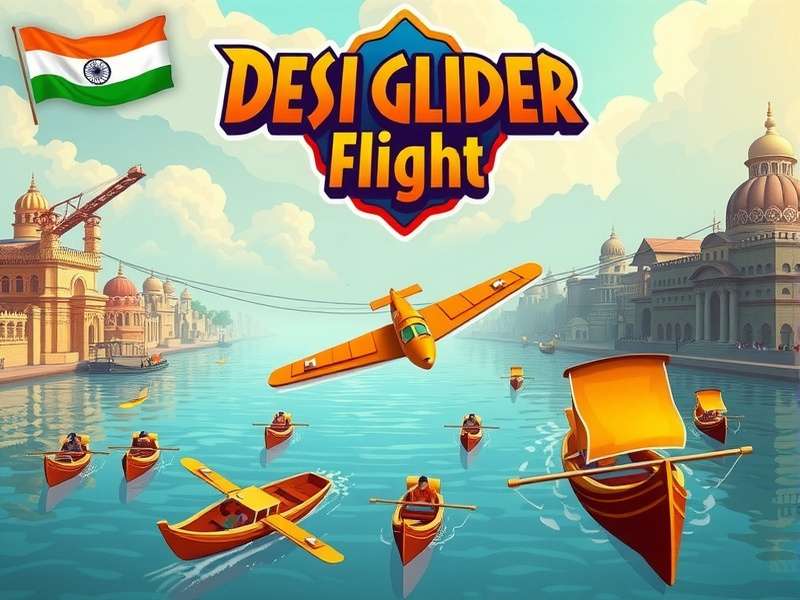
The Daman Games development team during the final stages of Desi Glider Flight’s production, focusing on regional language integration, cultural authenticity checks, and offline play optimization. The team included developers, designers, cultural consultants, and linguists from across India.
👥 Team & Vision
Desi Glider Flight was developed by a diverse team of 22 professionals at Daman Games, including developers, game designers, 3D artists, cultural consultants, linguists, and sound engineers. Led by Rakesh Mehta (Founder & CEO) and Priya Sharma (Creative Director), the team’s core vision was to create a game that felt "by Indians, for Indians"—a product that would make players proud of their culture while providing hours of entertainment.
To achieve this ambitious vision, the team made several key decisions early in the development process. First, they recruited cultural consultants from each of India’s major regions to ensure that the game’s city themes, collectibles, power-ups, and festival elements were authentic and respectful of local traditions. These consultants included historians, cultural experts, and local residents who provided valuable insights into regional customs, landmarks, and everyday life.
"We didn’t want to create just another game with Indian landmarks slapped on generic gameplay," explained Priya Sharma in an interview with The Hindu Tech. "We wanted every aspect of Desi Glider Flight to feel deeply rooted in Indian culture. For example, in the Chennai level, we didn’t just add the Marina Beach as a background—we included details like the famous Marina Beach vendors selling idlis and filter coffee, the sound of waves mixed with Tamil street music, and even the monsoon rain that Chennai experiences every year. These small, authentic details are what make the game resonate with Indian players."
The team also prioritized diversity within its own ranks, ensuring that developers, designers, and linguists from different regions of India were represented. This diversity helped the team avoid cultural stereotypes and ensured that each region’s representation in the game was nuanced and respectful. For instance, the Bengali language localization was handled by native Bengali speakers from Kolkata, while the Gujarati localization was done by linguists from Ahmedabad who were familiar with both formal and colloquial Gujarati.
Another key aspect of the team’s vision was accessibility. Recognizing that a significant portion of India’s mobile users have low-end devices and limited internet connectivity, the team made a conscious decision to prioritize performance optimization and offline play from the very beginning of development. This meant making difficult technical trade-offs, such as using low-poly 3D graphics instead of high-definition textures, but the team believed these sacrifices were necessary to make the game accessible to all Indians.
🌐 Localisation Efforts
Localization was a cornerstone of Desi Glider Flight’s development, with the team investing over 9 months in ensuring that the game was accessible to non-English speakers across India. Unlike many mobile games that simply translate text into regional languages, Desi Glider Flight’s localization process was much more comprehensive and culturally sensitive.
The game currently supports eight regional languages—Hindi, Tamil, Telugu, Bengali, Kannada, Malayalam, Gujarati, and English—with plans to add Punjabi, Marathi, and Odia in future updates. The localization process involved several key steps:
- Cultural Adaptation: The team didn’t just translate text—they adapted it to suit each region’s cultural context. For example, in the Tamil version, tutorial messages use colloquial terms like "machan" (friend) and "pa" (brother) to make the game feel more relatable, while in the Bengali version, tutorials reference Durga Puja and other local festivals. This cultural adaptation extended to all aspects of the game, including power-up names, collectible descriptions, and achievement titles.
- Linguistic Nuance: The team worked with native speakers and professional linguists to ensure that translations were accurate and captured the intended meaning. Special attention was paid to avoiding literal translations that might lose cultural context. For instance, the Hindi term "chai" was retained in all versions of the game instead of translating it to "tea," as it carries a deeper cultural significance in India that "tea" doesn’t fully convey.
- Voiceover Recording: Unlike many mobile games that rely solely on text, Desi Glider Flight includes voiceovers for tutorials, level introductions, and in-game events—all recorded in each of the supported languages by native speakers with regional accents. For example, the Tamil voiceover uses a natural Chennai accent, while the Hindi voiceover uses a neutral North Indian accent that is widely understood across Hindi-speaking regions.
- UI Localization: All user interface elements, including buttons, menus, and settings, were fully localized to ensure that non-English speakers could navigate the game easily. The team conducted extensive testing with users who spoke each language to ensure that the localized UI was intuitive and easy to understand.
- Regional Slang Integration: Where appropriate, the team incorporated regional slang and colloquialisms to make the game feel more authentic and relatable. For example, the Mumbai level includes Marathi slang terms like "bhai" (brother) and "chalo" (let’s go), while the Punjabi localization (coming soon) will include popular Punjabi slang words.
The localization efforts paid off significantly. According to Daman Games’ user data, 72% of players use a regional language while playing Desi Glider Flight, with Hindi being the most popular (45%), followed by Tamil (12%), Telugu (8%), and Bengali (7%). The game’s localization has been widely praised in user reviews, with many players noting that it feels like the game was specifically designed for their region.
⚙️ Technical Optimizations
One of the biggest technical challenges the team faced during development was optimizing Desi Glider Flight for the wide range of mobile devices used in India. According to a 2023 report by Counterpoint Research, over 65% of smartphones in India are priced below ₹15,000, with limited processing power, RAM, and storage. Additionally, internet connectivity remains a significant issue in rural areas, where over 60% of India’s population lives.
To ensure that Desi Glider Flight would run smoothly on these devices and in these conditions, the team implemented several key technical optimizations:
- Low-Poly 3D Graphics: The game uses low-poly 3D graphics instead of high-definition textures, which significantly reduces the strain on low-end devices. Despite this, the graphics are vibrant and detailed, with bright colors that reflect Indian aesthetics and cultural elements. The art team spent months perfecting the low-poly style to ensure that it looked appealing while maintaining performance.
- Offline-First Design: Desi Glider Flight was designed from the ground up to work entirely offline. All levels, power-ups, and progress are stored locally on the device, with no mandatory internet connection required to play. Players can optionally sync their progress to the cloud (via Google Play Games or Apple Game Center) when they have an internet connection, ensuring they don’t lose their data if they switch devices.
- Reduced File Size: The game’s initial download size is just 45MB, making it easy to install even on devices with limited storage. Additional content (like new cities or festivals) is downloaded in small, optional updates (3-10MB each) that players can choose to download when they have an internet connection.
- Battery Optimization: The game uses minimal battery power compared to other mobile games. The team implemented several battery-saving features, including auto-brightness adjustment, frame rate limiting (30fps on low-end devices), and background process management. These optimizations ensure that players can enjoy extended play sessions without draining their device’s battery.
- Adaptive Performance: The game automatically detects the device’s hardware capabilities and adjusts its performance settings accordingly. On high-end devices, it runs at 60fps with enhanced visual effects, while on low-end devices, it reduces the frame rate to 30fps and disables some non-essential visual effects to maintain smooth gameplay.
- Data Compression: All in-game assets, including images, sounds, and 3D models, were heavily compressed without compromising quality. The team used advanced compression algorithms specifically optimized for mobile devices, reducing the overall file size by over 50%.
The team conducted extensive beta testing across India to ensure that the game performed well on a wide range of devices and in various network conditions. Beta testing was conducted in over 30 cities and towns across tier 1, 2, and 3 locations, including Mumbai, Delhi, Chennai, Bangalore, Lucknow, Patna, Bhopal, Indore, and several rural areas. Beta testers were asked to play the game on their own devices (which ranged from budget smartphones to high-end flagship devices) and provide feedback on performance, gameplay, cultural authenticity, and localization.
This beta testing proved invaluable. For example, beta testers in rural areas requested longer offline play sessions without any restrictions, leading the team to remove the initial 2-hour offline limit they had planned. Testers with low-end devices reported frame rate drops in certain levels, prompting the team to further optimize those levels by reducing the number of on-screen objects. And localization testers identified several instances where translations were accurate but not culturally appropriate, which the team corrected before launch.
🎵 Sound & Music Design
Sound and music played a crucial role in creating the authentic desi experience that Desi Glider Flight is known for. The team collaborated with several Indian musicians and sound designers to create a soundtrack that reflects the diversity of Indian music and culture. Each level features its own unique background music inspired by the region’s traditional music, while sound effects are designed to evoke everyday Indian experiences.
The soundtrack includes a mix of traditional Indian instruments and modern electronic elements, creating a unique fusion that appeals to both younger and older players. Some of the instruments used include the sitar, tabla, dholak, sarangi, veena, nadaswaram, and harmonium. Each level’s music was composed by musicians from the respective region to ensure authenticity—for example, the Tamil levels feature music composed by Chennai-based musicians familiar with Tamil folk and classical music, while the Punjabi levels (coming soon) will feature music by Punjabi folk artists.
Sound effects were equally important in creating an immersive experience. The team recorded authentic sounds from across India, including the honking of auto-rickshaws in Delhi, the waves of the Arabian Sea in Goa, the chants of pilgrims in Varanasi, and the street vendors’ calls in Mumbai. These sounds are integrated into the gameplay to create a sense of place and immersion.
The voice acting was another key element of the sound design. As mentioned earlier, all voiceovers were recorded by native speakers with regional accents, adding to the game’s authenticity. The voice actors were chosen not just for